Letter dated 20 June 2011 from the members of the Monitoring Group on Somalia and Eritrea addressed to the Chairman of the Security Council Committee pursuant to resolutions 751 (1992) and 1907 (2009) concerning Somalia and Eritrea358. Arms trafficking from western Eritrea is just one component of a much>broader, and highly profitable, smuggling operation overseen by General Teklai Kifle “Manjus”, Commander of the western military zone (see also paras. 262 and, 416 and 420 below). His principal Sudanese counterpart in this cross-border activity is Mabrouk Mubarak Salim, the current Minister of State for Transport of the Sudan, who is also a wealthy merchant and former leader of the now defunct “Free Lions” rebel group that once formed part of the Sudanese “Eastern Front” opposition alliance supported by Eritrea. Salim, an ethnic Rashaida, works closely with other well-established Rashaida smugglers, who operate with the full knowledge of Government officials on both sides of the border.
Saturday, 27 June 2020
UN Monitoring Group on Somalia and Eritrea Report July 2011
Letter dated 20 June 2011 from the members of the Monitoring Group on Somalia and Eritrea addressed to the Chairman of the Security Council Committee pursuant to resolutions 751 (1992) and 1907 (2009) concerning Somalia and Eritrea358. Arms trafficking from western Eritrea is just one component of a much>broader, and highly profitable, smuggling operation overseen by General Teklai Kifle “Manjus”, Commander of the western military zone (see also paras. 262 and, 416 and 420 below). His principal Sudanese counterpart in this cross-border activity is Mabrouk Mubarak Salim, the current Minister of State for Transport of the Sudan, who is also a wealthy merchant and former leader of the now defunct “Free Lions” rebel group that once formed part of the Sudanese “Eastern Front” opposition alliance supported by Eritrea. Salim, an ethnic Rashaida, works closely with other well-established Rashaida smugglers, who operate with the full knowledge of Government officials on both sides of the border.

Wednesday, 24 June 2020
ዓብደላ ሐሰን ፥ ታሪኽ ጅግንንት ተጋዳላይ ፥ ብ 1971 መንደቅ ቤት ማእሰርቲ ካርቸሊ ኣስመራ ብምንኮል ዘምለጡ ተጋዳልቲ Abdella Hassen's heroic journey of Struggle
ዓብደላ ሐሰን ፥ ታሪኽ ጅግንንት ተጋዳላይ ፥ ብ 1971 መንደቅ ቤት ማእሰርቲ ካርቸሊ ኣስመራ ብምንኮል ዘምለጡ ተጋዳልቲ
ግዕዞ ታርኽ ቃልሲ ካብ ምምራሕ ቃልሲ ተማሃሮ አስመራ አብ 1960s ናብ ሜዳ ናብ ስርሒታት ፍዳእይን ከተማ አስመራ ናብ ቤት ማእሰርቲ ካቸሊ ናብ ሜዳ
"ምስ ብጻይ ስዉእ ሁማድ ዓምር ኢድሪስ (ካብሊ) ካብ ቤት ማእሰርቲ ካርቸሊ ናይ ኣስመራ ኩዒትና ዛወጻእናሉ ዕለት13/4/1971 ኔሩ። ኣነ ብጻይ ገረዛጊሄር ተወልደ ምስ ተታሕዜ ተፈሊጠ ስለዝነበርኩ ኣምሊጠ ዕለት 14/4/1967 ንሜዳ ወጺኤ፣ ብዕለት 28/10/1970 ብጸላኢ ተተሓዝኩ ።
The heroic story of a freedom fighter's journey from a student leader in Asmara in the 1960s to the field to being a fedayeen in Asmara, the capture by the enemy, and the escape from the notorious Carsheli prison in 1971 by digging the walls of the prison. Plus Abdella Hassen Interview with German researcher Günter Schröder.
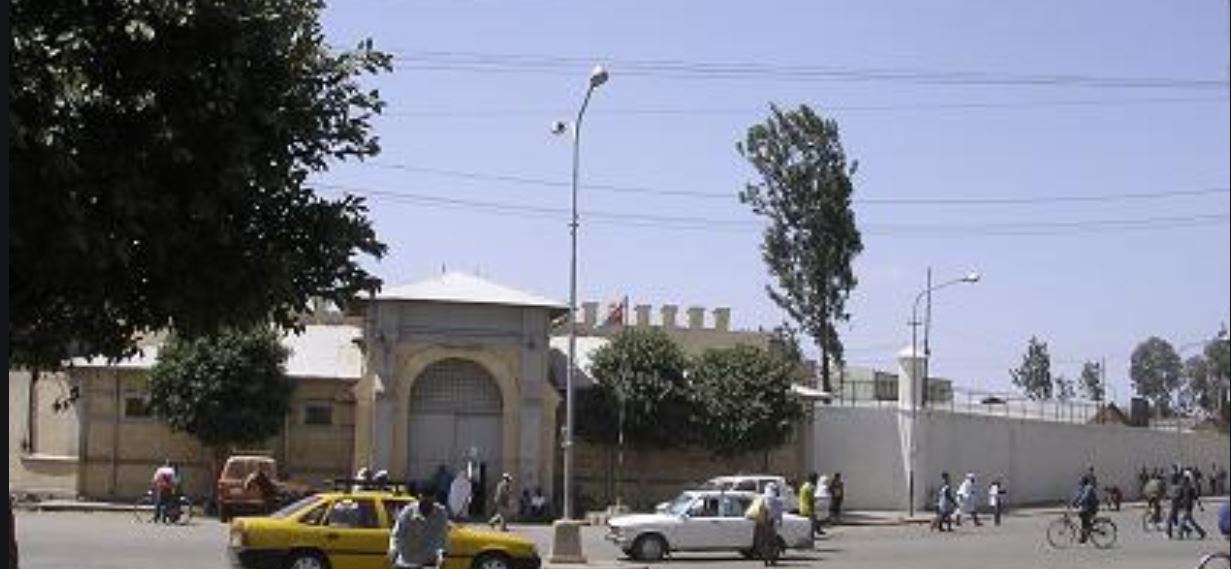
The well-guarded Carshelli prison, Asmara

Abdella Hassen (left) and Humed Amer Idris (right)

Abdella Hassen (left) and Gerezgher Tewolde (right)
https://www.mediafire.com/file/3cnfv0nzxqvirmk/Abdella_Hassen_Tigrinya_C.pdf/file
Abdella Hassen Interview with German researcher Günter Schröder:
https://www.mediafire.com/file/ymuechdxfegucht/Abdalla_Hassan_13-2-1991.pdf/file
عبدالله حسن علي قصة بطولات مناضل
:عبدالله حسن علي
قصة بطولات مناضل
رحلة من نضالات الحركة الطلابية بأسمرا في الستينات، الى
الإنضمام الى جبهة التحرير الإرترية، الى العمل الفدائ بأسمرا، الى
السجن، ثم
الهروب الأسطوري من سجن أسمرا، بحفر حيطة السجن، ثم العودة الى الميدان في
السبعينات
وعندما انكشف
امري وتم القبض على زمیلي جریزقھیر تولدي خرجت إلى المیدان وكان ھذا بتاریخ ١٤
أبريل ١٩٦٧م
ھروبي من سجن ماركاتو مع زمیلي
الشھید ھمد عامر ادریس (كابلي) عن طریق الحفر كان بتاریخ 13/4/1971م


رحلة فى الذاكرة مع الفدائ المناضل عبدالله حسن
Thursday, 11 June 2020
تٱريخ اليعقوبي المجلد الٱول، ممالك البجة The History of Al Yagoubi Vol I
تٱريخ اليعقوبي المجلد الٱول، ممالك البجة ٢١٧ الى ٢١٩

https://www.mediafire.com/file/dfbcvu484iwti2r/%u062A%u0627%u0631%u064A%u062E_%u0623%u062D%u0645%u062F_%u0628%u0646_%u0623%u0628%u064A_%u064A%u0639%u0642%u0648%u06281.pdf/file
Thanks to Abdo Humed for sharing
Sunday, 7 June 2020
ኣባይና ሳዋ ልካይድ ሴማ እንደይ ተሓገዛ 1853 ጸላኢና ሳዋ ይውረድ ملعون من أجبر على الذهاب إلى ساوا
ኣባይና ሳዋ ልካይድ
ሴማ እንደይ ተሓገዛ 1853*


ጸላኢና
ሳዋ ይውረድ ፥ ትርጉም ካብ ቓንቓ ትግራይት
ግጥሚ
ብ ደርመስ ወድ ትንሥኤው መንሳዕ ቤት አብርሀ 1853
እዛ
ግጥሚ እዚኣ ኣብ ግዜ ወራራት ግብጺ ኣብ ምዕራባዊ ቆላታት ኤርትራ ዝተጻሕፈት እያ። ዝተጨውዩ ሰባት ክረድኡ ንሳዋ ወሪዶም ምስተመልሱ
ዝጻሓፍዋ እያ። ክልተ ካብ ሓሙሽተ ጥንታውያን ንግስነታት ቤጃ (Beja kingdoms**) አብ ናይ ሎሚ ኤርትራ ምንባረን ዝዝከር
ኮይኑ ፣ ኣብ ሐንቲ ካብ፤አተን መደብር ወተሃደራዊ ታዕሊም መእሰያት ኣብ ኣብ ሳዋ ነይርዋ ።
“Cursed
is the one who is forced to go to Sawa” is a poem in Tigrait by Dermas wed
Tensaew in 1853. The poem was written during the Egyptian occupation of the
western lowlands where they killed and abducted people. The poet and his
companions went to find the abducted to Sawa and found out they had been taken
to Sudan. He wrote the poem when they came back from Sawa. Their description
fits today’s Sawa and its environs. It worthy to note that two of the ancient
Beja Kingdoms were in present Eritrea and in one of them, Sawa was a military training outpost.
م"ملعون من أجبر على الذهاب إلى ساوا"
قصيدة بالتيقرايت الفها درماس ود تينسؤ
عام ١٨٥٣. كتبت القصيدة أثناء الاحتلال المصري لأراضي المنخفضة الغربية حيث قتلوا
واختطفوا الناس. ذهب الشاعر ورفاقه للعثور على المختطفين إلى ساوا واكتشفوا أنهم
نقلوا إلى السودان. كتب القصيدة عندما عادوا من ساوا. يناسب وصفهم اليوم ساوا
وضواحيها. وتجدر الإشارة إلى أن اثنتين
من ممالك البجا القديمة كانتا في مايعرف
بإريتريا اليوم ، وفي أحدهما كانت ساوا مركزًا عسكريًا للتدريب.د
*Enno Littmann,
Publication of the Princeton Expedition to Abyssinia, Vol. III, Tigre Text,
Leyden, 1913, pp. 22-23.
**
Five Independent Beja Kingdoms between the Nile and the Red Sea ]1]
Al-Ya‘qubi, in his history
which was composed about A.D. 872, gives a description of the political
situation in the north of this region in his own time after the Beja
overrunning of part of the Axumite kingdom. [2] Between
the Nile and the Red Sea were five independent kingdoms.
The first, called Naqis, extended
from the Nile near Aswan to the lower Baraka. Its capital, Hajar, was visited
by the Muslims for trading purposes.[3] The various Beja tribes in the kingdom were the Hadareb, Hiab,’Ama’ar, [4] Kawbar, Manasa (Mensa?), Rasifa, ‘Arbarb’a, and Zanafaj [5].
In their country were mines of gold and precious stones worked by Muslims with
whom they were on good terms.
Next came the Baqlin (Rora Baqla?),
covering the Eritrean Sahil, the Rora region of the plateau, and the middle
course of the Baraka. Their religion resembled that of the Magians and
Dualists. They called God Az-Zabjir [6] and
the Devil Sahay Haraqa.
The third kingdom was called Bazin
in the region between the Christian Nuba kingdom of ‘Alwa and the Baqlin with
whom they were formerly at war. The Bazin were possibly the Kunama who are
called Bazen by the Abyssinians.
The fourth, called Jarin, had a powerful king whose rule extended from the coastal town called Badi [7]
The fifth, called Qaţ’a, was the
last Beja kingdom and extended from the border of Badi’ to a place
called Faykun. They were a brave and powerful people and had a military training
school called dar
as-sawa where the young men were trained in arms. These tribes were
all pagan with the exception of the southernmost who were Christians subject to the
Abyssinian king.
The gradual spread of Islam amongst the
Beja began with the settlement of Muslims in the mining district. Maqrizi
records that the excursion of the Beja against Egypt let to the governor of
Aswan sending ‘Abd Allah ibn al-Jahm against them. He concluded a treaty with
their chief, Kanun ibn ‘Abdal-‘Aziz, whose headquarters was at Hajar in the
year A.H. 216 (A.D. 831). His account shows that the Arab traders and mine
owners who were active in northern Beja territory may have influenced the
chiefs, and that mosques for the benefit of these Muslims existed, two of which
are named, one at Hajar, the capital of Naqis, and another at Şinjat.
]1] Carlo Conti Rossini, Storia D’Etiopia,
Bergamo, Istituto Italiano D’Arti Grafiche,1928, pp.265-280.
]2] Al-Yaqubi, Historiae (ed. Houtsma,1883),
I,217-19; Trimingham, J. Specer, Islam in Ethiopia, London, Frank CASS,
3rd ed.1976,p.49
]3] Al-Yaqubi, Kitab al-Bulda, ed. De
Goeje, in B.G.A., vii (1892), 336. Hajar has not been
identified, but it was probably in the Red Sea Hills in the neighborhood of
Sinkat.
]4] Possibly the Amar’ar who now live in the region around Port Sudan.
]5] In his K. al-Buldan (pp.336-7), which was composed a little
later in A.D. 891-2, Al-Ya’qubi places the Zanafaj in the country of Baqlin,
‘the town where the king of the Zanafija resides is called Baqlin which the
Muslims visit occasionally for trading. Their rite (madhhab) is like
that of the Hadariba. They have no revealed law and merely worship an idol
called hahakhawa.
]6] V.II. az-Zabahir, al-Bahir, possibly the Eth. Egzi’aheher; cf. Ibn al-Faqih al-Hamadhani, K. al-Buldan,
B.G.A. v. 78
- ]7] Crowfoot identifies Badi with Airi (Ar-Rib) near ‘Aqiq
(‘Some Red Sea Ports…’, Geog.Jour. xxxvii, 1911,542ff), while Wiet
identifies it with Massawah, which even today is called Batsi in
Tigre and Badi in Bedawie.
Thursday, 4 June 2020
The Daring ELF Operation of Haikota July/August 1963
The Daring ELF Operation of Haikota July/August 1963

Gendifil
An ELF unit led by Adem Mohamed Hamid planned to attack and
take control of the police station in Haikota. At the beginning of the armed
struggle, it was the police force that got engaged with the ELF units. The
Haikota Station was an essential outpost for that purpose. An ELF fighter,
Mebrahtu Tseggai, from Bogo nicknamed, Getaa 'ገታእ', was sent to Haikota to survey
the possibility and collect information. When he finished his mission, he reported to
the Head of the unit Adem Mohamed Hamid, nicknamed ‘Gendifil’-elephant
soldier that it was possible. Gendefil
then went to Haikota disguised as a mad person and confirmed it was indeed
feasible. Before the operation, a policeman from Bushuka station, Omer Dini, had
defected to the ELF with some weapons.
According to the plan, the unit stopped a passenger bus near
Haikota. The bus was on its way to Tessenei. The driver was Abu Humed. The fighters,
some of them unarmed, known then as ‘Kolei’ stopped the bus before it reached
Haikota. They politely asked all the passengers to disembark near a place with Trees
and water. They took over the van and drove to Haikota, singing marriage songs.
They stopped in front of the police station and immediately attacked and took
control of the station. In the exchange, there were some casualties in the
police. But not from the fighters. The
police were taken by surprise.
The fighters took 35 rifles (Abu Ashara), 60 hand grenades, and
two light machine guns for the first time. They drove the bus into the wilderness,
but the bus got stuck in a river-bed, not far from the town. So they had to carry
all the weapons for a long distance. This incident paved the way for the battle
of Togoruba that took place on 15th March 1964, which was the first
confrontation with the Ethiopian army.
Gendefil, who was born in the
village of Shalab in 1935, joined the Sudanese Defence Forces in
1953. He met Awate in Hawasheit on 28/9/1961. He passed away on 17.04.1996
A short biography on Gendefil , in Arabic.
Source: ELF records and interviews with persons who knew
about the operation
Sunday, 17 May 2020
إدريس محمد آدم في مقابلة مع الباحث الالماني، جونتر شرودر مارس 1989
إدريس محمد آدم في مقابلة
مع الباحث الالماني، المهتم بقضايا القرن الإفريقي، جونتر شرودر
الزمان / المكان:مارس 1989 / الخرطوم يتحدث فيها عن بدايات الثورة

شكرًا لود عثمان
لترجمة المقابلة إلى العربية
Monday, 11 May 2020
Günter Schröder Interview with Tesfay Weldemikael "Dagiga' 1989_1991
Günter Schröder Interview with
Tesfay Weldemikael "Dagiga' 1989_1991


Different Aspects of
the History of the Eritrean Revolution:
- The youth and student movement in Asmera in the early '70s and how and when he joined the ELF
- ELF Fedaayin Administration before 1975
- Background of some Revolutionary Council (RC) Members
- The political situation in Eritrea and the other political movements in 1991
- On the relations of ELF with TPLF and EPRP
Monday, 4 May 2020
Idris Mohamed Adem's interview with Günter Schröder in March 1989
Idris Mohamed Adem's interview with Günter
Schröder in March 1989 in Khartoum

Idris M Adem Chairing a session of the Eritrean Assembly
Monday, 2 March 2020
An Unfinished African Dream/ Eritrea: Ancient Times To 1968
An Unfinished African Dream/ Eritrea: Ancient Times To 1968 by Mohamed Kheir Omer, published 2020 by LuLu Publishing Services, based in the USA


One minute summary: https://www.youtube.com/watch?v=pLv1DsyPgzk
Amazon author page: https://www.amazon.com/Mohamed-Kheir-Omer/e/B084ZYPMR8
Book website: https://www.mkafricandreams.com/
Book interview in English: https://www.youtube.com/watch?v=eHlFp7fQUGs
Book Review by Pen Eritrea: https://peneritrea.com/blog/book-review-the-dynamics-of-an-unfinished-african-dream-eritrea
Book interview in Tigrinya: https://www.sbs.com.au/language/tigrinya/audio/conversation-with-the-writer-of-the-dynamics-of-unfinished-african-dreams-dr-mohamed-kheir
Book interview in Arabic:
عرض لكتاب دينامكيات حلم أفريقي غير مكتمل إريتريا: من العصور القديمة حتى 1968 Part I
عرض لكتاب دينامكيات حلم أفريقي غير مكتمل إريتريا: من العصور القديمة حتى 1968 Part II
Book interview in Amharic Part I:
https://www.sbs.com.au/language/amharic/audio/interview-with-dr-mohamed-kheir-omer-pt-1
Book interview in Amharic part II:
https://www.sbs.com.au/language/amharic/audio/interview-with-dr-mohamed-kheir-omer-pt-2
Book Interview with Tempo Africtv: https://www.facebook.com/100009535030071/videos/2733533803641094/?t=0
Available at: http://www.lulu.com/shop/mohamed-kheir-omer/the-dynamics-of-an-unfinished-african-dream-eritrea-ancient-history-to-1968/paperback/product-24405120.html
Available at: https://www.amazon.com/Dynamics-Unfinished-African-Dream-Eritrea/dp/1684716497/ref=sr_1_1?crid=DP8J2WNTEKF5&keywords=an+unfinished+african+dream+eritrea&qid=1583150898&sprefix=An+Unfinished+African+dream%2Caps%2C307&sr=8-1
Book Review by Prof. Tekeste Negash: http://awate.com/book-review-dynamics-unfinished-african-revolution/


Saturday, 29 February 2020
Tigrinya Applicatives in Lexical-Functional Grammar by Nazareth Amlesom
Tigrinya Applicatives in Lexical-Functional Grammar, a 2011 PhD Thesis by Nazareth Amlesom, Department of Linguistic, Literary and Aesthetic Studies University of Bergen
Part of the Abstract:
The primary goal of this thesis is to describe and analyze applicative constructions in Tigrinya. An applicative construction is characterized by a verb that bears an affix for an argument that either has a semantic role that is not normally entailed by the lexical meaning of the base verb or is specified as a peripheral argument. The choice of an applicative expression is motivated by semantic and discourse factors. Applicatively expressed arguments are associated with referents that possess high semantic prominence and discourse salience. The applicative phenomenon is viewed as a morphosyntactic strategy that introduces a core object function that is salient in the discourse event described by the verb. The theoretical motivation of this study is to explore the conditions that trigger object marking in Tigrinya so as to examine the semantic, functional and discourse properties of objects. The main theoretical framework used in this research is Lexical-Functional Grammar (LFG). This formalism assumes that the different linguistic information pertaining to functional, semantic and discourse structures can be modeled as interrelated parallel representations.
https://bora.uib.no/bitstream/handle/1956/5730/42478%20Nazareth%20Kifle%20materie.pdf?sequence=1&isAllowed=y
Saturday, 15 February 2020
IOM WORLD MIGRATION REPORT 2020
IOM WORLD MIGRATION
REPORT 2020
Eritrea is the only country in Africa that has no civil strife, but yet produces the largest number of refugees

https://publications.iom.int/system/files/pdf/wmr_2020.pdf
Sunday, 19 January 2020
Eritrea: Miscellaneous historical Documents from the 40s & 50s
Eritrea: Miscellaneous historical Documents from the 40s & 50s


British Statistics on Casualties due to Shifta activities and casualties inflicted on them
1948 - April 1950

Police Commissioner authorizing the flying of the Muslim League flag 1951


Saturday, 28 December 2019
Animal Diseases and Veterinary Services in Eritrea 2001
Animal Diseases and Veterinary Services in Eritrea: The Past, Present and Future Challenges
Mohamed Kheir Omer, Gebrehiwet
Taeme and Andom Gebremeskel
A paper presented at the Eritrean Studies Association Conference held at Asmara, Eritrea
June 2001
Can be downloaded at the link below:
http://www.mediafire.com/file/fipdne3jy4bo9x6/Veterinary_Services_2001.pdf/file
Thursday, 26 December 2019
Refugees and citizens: Understanding Eritrean refugees’ ambivalence towards homeland politics
Refugees and citizens:
Understanding Eritrean
refugees’ ambivalence towards
homeland politics, a 2019 article by Milena Belloni, University of Antwerp, Belgium
Abstract
This article revisits ambivalence as a protracted state which does not simply develop as a result of the migration experience but stems from overlapping levels of normative inconsistency. Drawing from my ethnography of Eritreans’ everyday life in the homeland and abroad, I analyse their attitudes of patriotism and disenchantment through an ambivalence lens. Their ambiguous attitudes are arising from national and transnational Eritrean state policies and are further complicated by their role as “political refugees” in host countries. My informants’ ambivalence stems from them embodying more than one role (i.e. patriots, family breadwinners, refugees from and citizens of their homeland), from contradictory expectations pertaining to the same role (i.e. young citizens in Eritrea) and from clashing implications of being members of two different social systems (i.e. the destination country and the country of origin). Thus, Eritreans’ political loyalties and actions are characterized by a state of ambivalence throughout their migration process. Despite its peculiar characteristics, this case study sheds light on the complexity of ambivalence, as more than a temporary condition, for migrants and refugees in particular. In the current scenario of emigrant states’ transnational governance, protracted ambivalence is likely to mark the attitudes of an increasing number of people on the move as both refugees from and citizens of their country of origin.
You can access the full text at the link:
https://journals.sagepub.com/doi/pdf/10.1177/0020715218760382
Abstract
This article revisits ambivalence as a protracted state which does not simply develop as a result of the migration experience but stems from overlapping levels of normative inconsistency. Drawing from my ethnography of Eritreans’ everyday life in the homeland and abroad, I analyse their attitudes of patriotism and disenchantment through an ambivalence lens. Their ambiguous attitudes are arising from national and transnational Eritrean state policies and are further complicated by their role as “political refugees” in host countries. My informants’ ambivalence stems from them embodying more than one role (i.e. patriots, family breadwinners, refugees from and citizens of their homeland), from contradictory expectations pertaining to the same role (i.e. young citizens in Eritrea) and from clashing implications of being members of two different social systems (i.e. the destination country and the country of origin). Thus, Eritreans’ political loyalties and actions are characterized by a state of ambivalence throughout their migration process. Despite its peculiar characteristics, this case study sheds light on the complexity of ambivalence, as more than a temporary condition, for migrants and refugees in particular. In the current scenario of emigrant states’ transnational governance, protracted ambivalence is likely to mark the attitudes of an increasing number of people on the move as both refugees from and citizens of their country of origin.
You can access the full text at the link:
https://journals.sagepub.com/doi/pdf/10.1177/0020715218760382
Monday, 23 December 2019
Introducing Haji Jaber's award winning Arabic novels
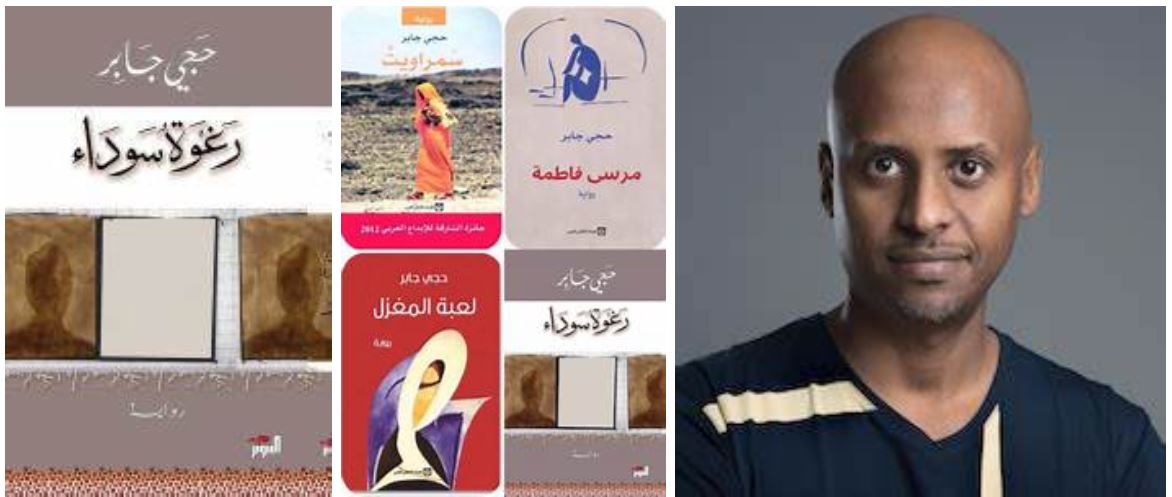
Haji Jaber is an Eritrean novelist, born in the coastal city
of Massawa in 1976. He escaped with his family to Jeddah while he was breast
feeding, to escape Ethiopian atrocities. He grew up and studied in Jeddah. As
an immigrant in Saudi Arabia it was difficult for his family to find him a
school but at last, he was able to get private education. He has published so
far four novels: Samrawit (2012), winner of the Sharjah Award for Arab
Creativity in 2012, Fatma's Harbour (2013), The Game of the Spindle (2015),
which was longlisted for the 2016 Sheikh Zayed Book Award, and Black Foam (2018)
which won the prestigious ‘Katara Prize’ In the category of the published Arabic
novel. Eritrea is vividly present in his novels.
Samrawit (2012) is about discovering Eritrea after a long
immigrant life in Jeddah, it is about the author’s or at times the main
character’s first his interaction with the Eritrean Embassy there. It was about
‘home coming’. His first emotion-laden travel to Asmara and Massawa. Though the
author had no personal memories about Eritrea, his collective memories are rich
taken from his family who talked about the country daily. His mother’s longing
to Zewditu, her close friend in Massawa. The main character falls in love with
an Eritrean girl, Samrawit who lives abroad but was visiting Eritrea the same
time he was there, he is being a Muslim and she being a Christian had its
challenges. Samrawit is about this journey.
His second novel, Fatma's Harbour (2013) is about the main
character from Ghinda who lives in Asmara and falls in love with a secondary
school student who fails her exams deliberately to avoid Sawa and who lives at
the old street of ‘Mersa Fatma’ meaning Fatma’s harbour. The street is close to
Enda Mariam. Through the main character, the author takes us to youth life in
Asmara, the Asmara University refusal to go to Kemtawi Maatot in 2001, the
measures taken by Eritrean government, life in the national service in Sawa, the
kidnapping by the Rashaida (what the author calls the Shifta), life in Shegerb refugee
camp in Sudan with its old refugees of the 1960s and the new one. All those
events are beautifully narrated in the journey of the main character in search
for his lover. The novel
His third novel, The Game of the Spindle, centers around the main character, who is a
charming girl who had lost her both parents in the struggle and who lives with her
grandmother who excels in spinning yarn and telling stories. The story centers
in the newly formed Archives Department, where the charming girl is employed.
The archives department aim is to digitalize documents written by fighters during
the liberation. The folders are marked by three colors, BROWN which are
considered public, YELLOW which are regarded semi-confidential and RED which
are strictly confidential. People are recruited to this department after a lot
of scrutiny. The beginners are given only the BROWN files and as their loyalty is
tested their gradually deal with the confidential files. The main character
starts with the BROWN ones, but quickly finds them boring and uses her beauty
to get to the RED files. The Red files
get edited by the president of the state. She starts manipulating the stories
in the files, re-writing them as she would tell the story. It is in those RED
files she discovers a stunning history about her parents and about the
President.
Black Foam follows a group of Ethiopian Jews, the “Falash
Mura”, who are driven by poverty and desperation, emigrate to Israel in search
of a better life. Amongest them is Dawoud, who changed his name to “Dawit” so
that western NGOs can take him to Europe but fails. Upon learning that Falasha Jews
are being transported to Israel, he invents a new identity, changing his name
and history, so that he can travel to Israel alongside the Falasha Jews.
However, on arrival, he faces the trials and suffering experienced by
dark-skinned immigrants in the country.
Saturday, 30 November 2019
Tigre (Tigrait) Studies in the 21st Century
Tigre (Tigrait) Studies in the 21st Century; A 2015 book with 241 pages:


The book can be downloaded here; https://www.mediafire.com/file/48er96shz1vqpbv/Tigre+in+21st+century.pdf/file
Tigre Studies in the 21st Century: A Review of the book;, RAINER VOIGT, ed. / Tigre-Studien im 21. Jahrhundert, Studien zum Horn von Afrika, 2 (Köln: Rüdiger Köppe, 2015). xi, 241 p
At the 3rd International Enno Littmann Conference held at the Freie Universität in Berlin
On April 1–4, 2009, under the heading "Tigre, Aksum, and More," a special panel was devoted to the Tigre language and literature, as well as Tigre society. The present volume, carefully edited by Rainer Voigt, who also organized the conference, contains the papers presented on this panel, in which scholars from Eritrea actively participated. It is doubtless to their presence that we owe a refreshing first in Ethiopian and Eritrean studies, namely, abstracts of the articles also in Tigre. This language is described by the editor in the Introduction as the third largest Ethiopic-Semitic language after Amharic and Tigriñña; this is true only if we adopt the new trend in Ethiopian studies, and consider what used to be the Gurage dialect cluster with nearly 3,000,000 speakers or more, as a distinct group of several separate languages.
https://journals.sub.uni-hamburg.de/aethiopica/article/view/978/1000
The book: https://www.koeppe.de/titel_tigre-studies-in-the-21st-century-tigre-studien-im-21-jahrhundert
--------------------------
Thanks to Suleiman Bekit for sharing
Thursday, 7 November 2019
Eritrea - Ethiopia Boundary Commission DECISION Regarding Delimitation of the Border
Eritrea - Ethiopia Boundary Commission DECISION Regarding Delimitation of the Border between The State of Eritrea and The Federal Democratic Republic of Ethiopia
http://www.eritrea.be/EEBC_decisions_2002.pdf
Wednesday, 6 November 2019
Aspects of Tigrinya Literature until 1974
Aspects of Tigrinya Literature (until 1974) by Hailu Habtu, a M.Phil. thesis, School of Oriental and African Studies, University of London, 1981
ABSTRACT
This dissertation aims to study the origin and development of Tigrinya as a written language-a topic that has so far received little scholarly attention. As time and the easy accessibility of all the relevant material are limiting factors,this investigation is necessarily selective. Chapter One takes stock of all available writing in the Tigrinya language frcm its beginning in the middle of the last century up to 1974. Chapter Two briefly investigates the development of written Tigrinya to serve varying functions and ends and the general direction that its development took. Chapter Three provides a glimpse of the breadth and variety of literature incorporated in the Eritrean Weekly News published in Asmara by the British Information Services frcm 1942 to 1952. The E W N represented the sudden birth and development of a secular writing and provided a tradition and a reservoir of literature on which Tigrinya fiction later drew. Chapters Four, Five and Six deal with Tigrinya fictional literature on the basis of selected themes v. g. historical and political themes (Chapter Four), prostitution and approbation against dissolute life (Chapter Five), and education and success (Chapter Six)
https://eprints.soas.ac.uk/28848/1/10673017.pdf?fbclid=IwAR1KCJ2H3u34s6EzFSsaHI_eiHn07ihprNxviuPMWKHtgWkV9wkdEjKu-f4
Wednesday, 23 October 2019
Naud's Novel 'SALEH' - رواية محمد سعيد ناود، صالح
رواية محمد سعيد ناود، صالح

http://www.mediafire.com/file/b5vx8dl0cw9kkqw/Naud_novel_%25D8%25B1%25D8%25AD%25D9%2584%25D8%25A9_%25D8%25A7%25D9%2584%25D8%25B4%25D8%25AA%25D8%25A7%25D8%25A1.pdf/file
Thanks to Ibrahim Idris, Adal House for sharing
Subscribe to:
Posts (Atom)