Saturday, 28 September 2024

Testimonies from members of so-called Menkae Movement: Woldemariam Abraham


Weldemariam Abraham on ‘Menkae’: Interview with Aida Kidane Sweden 2004

 Introductory Note:

When the Isaias group (Selfi Nezanet/Alla group) split from the ELF in 1970, alongside two other factions, and later established the EPLF in 1972, presenting themselves as a democratic alternative to the ELF, they faced a significant internal challenge from a reform movement that called for democratic changes within the organization, 51 years ago, September 1973.  According to its members, this movement sought to democratize the EPLF’s leadership structure. The EPLF leadership, however, labelled it as an "ultra-leftist" group and referred to it as "Menkae." The conflict between the EPLF leadership and the Menkae faction has since played a defining role in shaping the EPLF's security policies. The language was edited for fluency.

Mohamed Kheir Omer

-------------

Highlights:

“We used to distribute leaflets to ELF fighters in the surroundings encouraging them to join us and focus on fighting against Ethiopia, not each other. On one occasion, we even used loudspeakers as they were nearby. At one point, we had about 10 of their fighters cornered in an old Italian fortified structure. We could have easily surrounded and eliminated them, but that was not our goal. We argued that we should all unite against our common enemy.

Shortly afterward, there was a skirmish with Ethiopian soldiers, and Isayas, Mehari Debesai, and Omaro collected the loudspeakers and our written articles from the news section, Zena. We had written about what democracy should mean between fighters, with civilians, and in the relationship between fighters and the leadership. We also composed a national anthem and songs that promoted discarding regional and religious differences.

The leadership, however, declared that these articles should be buried. But as we were digging, the reddish under-soil became visible, and the Ethiopian soldiers discovered our documents. Isayas and Omaro spread propaganda, blaming the Menkae (a faction within the EPLF) for allowing the Ethiopians to seize our materials. They even told Muslim fighters that we were communists who would prevent them from praying and reading the Quran.”

-----------------------------------

Aida, “I extend my deepest gratitude to Weldemariam Abraham for taking the time to share his experiences with me. Although he was initially reluctant to discuss his life before joining the front, I insisted, and he agreed.”

Personal History (2004)

As a student, I was involved in the revolts and was subsequently imprisoned at Sembel. At the time, I was attending the technical school, known as Point 4. I was among the last to be released because I had claimed that my parents were deceased. After my release, I started working in Wenji but was dismissed under the pretence of having Bilharzia. I then moved to Jima, and later to Assab, where I worked at the refinery before enrolling in a technical school. Despite being accepted for 3-4 scholarships, I was denied access. I believe this was due to my Eritrean identity, as I had passed the examinations at the top of my class but was still denied the opportunity.

During my time in Assab, I met four Eritrean men under house arrest who were required to sign in four times daily to prevent them from fleeing. They were accused of collaborating with the front. It was through them that I learned about the front, which led me to leave my job and move to Addis Ababa, where we formed the Tihisha secret group, keeping it hidden even from close friends.

While in Alem Bekagn (I have had enough of life) prison in Addis, (It was a prison for those served life sentences or where in a death raw.) I encountered Eritrean fighter prisoners who informed us that the ELF (Eritrean Liberation Front) was splitting, and a new front, Shabia (EPLF), was emerging. Along with Mesih, I established contact with Rustom. When Rustom was captured in Asmara, I took advantage of having a passport and fled to Italy, then to Austria, and eventually to Czechoslovakia and Germany. This long route was taken due to a lack of information. We only knew a little about Italy because of our familiarity with Catholicism. I did not realize at the time that I did not need a visa to enter Germany. I went to Czechoslovakia because many students were there, and a General Congress was to be held in Munich. It was there that the path to meda (the field) opened up to me, and after an eight-month stay in Germany, I joined the front. Even in meda, I opposed the leadership, which remains unchanged to this day.

On the Battle of Gereger

We entered meda (the field) through Yemen at the end of 1972. We had captured arms from the ELF and transported them using camels. Habte Selassie and I led the camels on foot, dressed in military attire. As we attempted to enter Eritrea, the Sudanese ordered us back and escorted us to avoid being ambushed by the ELF or being denied water access. Many ELF fighters under Abdella Idris’s command were killed, and the corpses were left to decay until the Sudanese buried them with bulldozers.

I was new to meda when the Battle of Gereger in Sudan began. Initially, we were at the temporary base of the EPLF, Selfi Nezanet, and Obel. We had come through the Red Sea from Aden under the leadership of Solomon Weldemariam and others, evading capture by the ELF. As we neared Gereger, we received a radio message informing us that the battle had begun. If not for this message, we might have been forced to flee further into Sudan or been captured by the ELF.

The battle intensified as we were few in number, carrying arms, and navigating rough terrain in the dark. I lost my way and unintentionally led the camel carrying weapons toward the Sudanese side. Fortunately, I was able to reunite with my comrades, and we avoided being caught by the ELF.

At the time, it was widely believed that no force could defeat the ELF. Their fighters were known as "Aremrem" (resilient), being numerous and strong, often finding ways to escape difficult situations. The Gereger battle occurred within Sudanese territory, and the ELF pursued us to that point. They outnumbered us and were better equipped. However, their lack of strategic planning prevented them from wiping us out. We had just acquired Kalashnikovs with 30 bullets each, while the ELF had Simonov’s with only 10 bullets, which could have given them an advantage.

After this, we entered Eritrean territory on March 4, 1973, passing through Arag to Gereger Asmara, which we held as a stronghold for an extended period. There were two Geregers: one in Sudan (Gereger Sudan) and another on the Eritrean side (Gereger Asmara). From there, we moved to Beiqat. I don’t recall much of the journey as I was wounded in battle with the ELF at Deqsem village near Zager on October 13, 1974. Bleqat and Fah became strongholds until the liberation.

During one encounter, Abdella led an attack, targeting a weapons depot held by a few Medada (Arabic for counter revolutionaries) reactionaries and bringing in many fighters. We fortified our position by building stonewall chains, 2-3 kilometres long and about one and a half meters high, to shield ourselves from enemy fire and the harsh winds. Despite this, the situation remained tense due to the ELF snipers. In one skirmish, we surrounded a group of 20 ELF fighters and asked them to surrender. While most complied, one defiant fighter opened fire, leading to a shootout that left all 20 dead.

The bodies of the ELF fighters began to decompose, and we could not bury them as the ELF still surrounded us, maintaining pressure. After our departure, the Sudanese buried them in mass graves. This was my first experience of the brutality and inhumanity of fratricidal warfare.

Our defense area spanned 2-3 kilometres in diameter. The Sudanese grew concerned when we began using artillery, such as the "Haun" bombs, which disrupted their security. They were surprised by our extensive use of weapons and ordered us to leave their territory.

Entering Eritrean Territory Again

The initial Battle of Gereger lasted only a morning, but sporadic skirmishes and tension persisted for about a week. Precise dates and details are difficult to recall as all our writings were confiscated, and the trauma of beatings, imprisonment, and time took their toll.

After regrouping, we devised a plan to send a signal indicating our movement and direction. We joined our group at night and participated in ongoing skirmishes. Eventually, the Sudanese ordered both organizations to leave Sudanese territory and cross into Eritrea, which took us two days, with the Sudanese army patrolling us throughout the journey.

As all sides were in combat positions, they were easily targeted and hit by machine-gun fire. Tragically, 20 of our brothers from the ELF were killed in a senseless manner. On our side, from the Selfi Nasnet group, we lost only one fighter, Gebretsadik Guangul, who was also known as "Cuba" because he had spent time there. He was peering through a small opening in the wall when a bullet struck him in the forehead, killing him instantly. Tewelde Eyob was wounded as a bullet passed through both his thighs. I cannot recall if there were any other injuries on our side.

At that time, we had not yet united with Shabia (PLF 1), and 6 or 7 fighters (the exact number is uncertain) were killed, but I did not know their names. Although we were fighting in the same area, our leaderships and administrations remained separate. We had only a coordinating committee to manage the distribution of arms and food according to the number of fighters.

In late May 1973, the ELF came to Gereger Asmara and captured a fighter who was guarding a mountain while others fought their way out. He was taken to the ELF stronghold in Barka but later fled to Kenya, as I heard. I believe his surname was Gebre Mikel.

Hilal, a brave and well-educated man from Dankalia, was killed in the battle of Qebir Wu'ut. He had ongoing disagreements with Isayas and Omaro. Another fighter, Solomon Mengesha, originally from Tigray and raised in Massawa, joined the struggle after coming from Germany. He had exhausted all his ammunition and was killed. Solomon had come with me from Germany and, in my presence, asked Isayas if he could fight for Eritrea, despite having only an Eritrean mother and no other demands. He was granted permission, but only two months later, he was martyred—an innocent and courageous man.

The Bleqat area had been under my unit’s control for a long time before the leadership moved there to ensure it was secure from the ELF. When fighting intensified in Kebessa, my unit relocated there. In September 1974, fighters like Wedi Fenkil were killed in the battle in Filfil.

The Bleqat-Fah area had previously been an ELF front. We were stationed about two kilometres apart, separated by mountains and valleys, making it challenging to distinguish our positions from theirs. The ELF fighters monitored our movements from the high ground using binoculars.

On the beginnings of the so-called Menkae Movement

We used to distribute leaflets to ELF fighters encouraging them to join us and focus on fighting against Ethiopia, not each other. On one occasion, we even used loudspeakers as they were nearby. At one point, we had about 10 of their fighters cornered in an old Italian fortified structure. We could have easily surrounded and eliminated them, but that was not our goal. We argued that we should all unite against our common enemy.

Shortly afterward, there was a skirmish with Ethiopian soldiers, and Isayas, Mehari Debesai, and Omaro collected the loudspeakers and our written articles from the news section, Zena. We had written about what democracy should mean between fighters, with civilians, and in the relationship between fighters and the leadership. We also composed a national anthem and songs that promoted discarding regional and religious differences.

The leadership, however, declared that these articles should be buried. But as we were digging, the reddish under-soil became visible, and the Ethiopian soldiers discovered our documents. Isayas and Omaro spread propaganda, blaming the Menkae (a faction within the EPLF) for allowing the Ethiopians to seize our materials. They even told Muslim fighters that we were communists who would prevent them from praying and reading the Quran.

We, the new and inexperienced fighters, were caught in the traps set by both Isayas’s EPLF and Abdella’s ELF. I consider myself fortunate to have survived, as I often protested against Isayas. In fact, I once openly stated—and even wrote down—that we should kill him.

The Rise of the Menkae Situation

When Isayas realized that the situation was not working in his favour and he feared losing in the internal elections, he sought to manipulate the circumstances. He relied on the support of Asmerom Gerezghier, Tewelde Eyob, and Tsegai Keshi. (Keshi later died from DDT poisoning—he had washed his clothes with DDT to kill lice, but when he wore them again, the poison slowly absorbed into his body and killed him.)

At the time, Adhanom Gebremariam and Wedi Fenkil were also part of Isayas’s group, which soon expanded to a meeting of 11 individuals. Their plan was to eliminate Solomon, but they knew that if he were killed, it would be obvious that the leadership was behind it. To cover up their actions, they aimed to involve all the leadership and veteran fighters. They initially accused him of regionalism and other charges but failed to carry out their plan. Solomon sensing danger, confided in Mebrahtu Weldu, shedding tears on his shoulder.

The root cause of the conflict was purely a struggle for power. When the veterans realized that the situation was spiralling out of control and that many fighters were becoming aware of it, they agreed to resolve their differences internally. Otherwise, they feared that the more educated fighters would gain an upper hand. The conflict escalated to a meeting of 65 fighters and eventually became known to the common fighters. Isayas, Solomon and Omaro made an oath to never oppose each other, marking the beginning of what would be called the Menkae situation.

I’ve previously explained the meaning of "Menkae." The term was originally used in 1970 by Naizgi Kiflu to describe the ELF. Having come from the United States, Naizgi was working with the Selfi Natznet to reconcile them with the ELF at Wina. When asked about his opinion on the ELF, he responded that the front was like "Menkae"—a bat. This term later stuck, and when he joined the front as a fighter, we travelled together through Aden. Naizgi, whose character was questionable, had studied at Lumumba University in the USSR and supposedly had contacts with Soviet security apparatus.

We had three haili units in Sahel, and two were dispatched to Kebessa to receive new recruits. Unfortunately, they missed their destination and ended up deeper in Kebessa, where they encountered fierce battles. Naizgi, wanting to avoid death, was seen firing into the sky while hiding—a behaviour noticed by his comrade, Abraha Chaalo. Fighters like Yohannes Sebhatu, Dehab, and Werku disliked Naizgi. Werku once even questioned how Naizgi had earned his MA degree, as he was often seen making foolish and ignorant statements.

The educated fighters were against Isayas, but Naizgi sided with him. When asked about this movement, Naizgi labelled it the "Menkae" movement, the same way he had described the ELF. The name stuck, but some of us tried to reframe it, saying that "Menkae" represented leftists or progressives, encouraging people not to be deterred by the label.

The female fighters also faced derogatory remarks. They were accused of coming to Sahel for men and were labelled as prostitutes. They were criticized for visiting beauty salons and were shamed for washing their hair. In reality, after cutting their hair short and enduring muddy conditions, they simply needed to maintain basic hygiene. Such unfounded accusations were used to demean them. While they weren’t beaten while free, anything could happen in prison. When men asked to marry them, the women declined, stating they were there to fight for liberation. They argued that if they wanted men, there were plenty in the towns.

There are individuals today who remember the precise timing of the executions during the Menkae purges. One person, now part of a civic society in Frankfurt, was a former prisoner. Two others are here with me, and another served as a prison guard.

One such prisoner was Abraham Antonio, whom we captured from the ELF in a battle near the Dekemhare-Keren road. He was an ELF political cadre covering the Senhit to Asmara area. We brought him to Sahel, where Mesih and I intervened to stop his execution. He had been a schoolmate of Isayas, Musie, and others, and he was imprisoned on the day the Menkae members were executed.

The "correction centre" served multiple purposes. One was to prevent fighters from spreading information about their prison experiences. When a prisoner was released, they were kept at the centre until they recovered from their wounds. During this time, they were threatened not to disclose how they were treated or name other prisoners. In the early 1970s, we had such centres in Sahel, and as our controlled areas expanded, more centres were established in various locations. Dr. Bereket was put in one of these centres after we captured him.

One of my friends, Mesih Rusom (also known as Mesih Berhe), and I were together in the Tihisha movement. He was the head of a department at the Commercial Bank of Addis and had studied at the Commercial School.

The Menkae movement was not an attempt to oust Isayas. Initially, there were five people involved: Tsegai Keshi, Wedi Fenkil, Isayas Afwerki, Tewelde Eyob, and Asmerom Gerezghier, who met to discuss how to defend themselves from the growing opposition. Later, Adhanom Gebremariam joined them, increasing their number to 11.

The leadership of Selfi Nasnet (PLF 2) consisted of five key figures: Isayas Afwerki, Tewelde Eyob, Asmerom Gerezghier, Mesfin Hagos, and Solomon Weldemariam. When it came to decision-making, the first three (Isayas, Tewelde, and Asmerom) had the majority vote, often leaving Solomon and Mesfin in the minority. Isayas saw Solomon as a threat because they frequently clashed. However, he couldn’t easily remove or kill Solomon without a legitimate reason, given that they were both in leadership positions.

Isayas’s group grew from 11 to 35 fighters and convened a meeting where they accused Solomon of regionalism. This tactic was used to rally support against him. At this point, Isayas had begun seeking alliances in all hailis, telling them that Solomon’s closeness with Shabia leadership was concerning.

During one of these meetings, Tsegai Keshi hit Musie Tesfa Mikel with his rifle butt after Musie told Isayas, "Can you silence your dogs? We can’t understand each other." Tsegai, frustrated, retorted, "Didn’t we say before that we should get rid of these students before fighting the ELF?"

The accusations of regionalism against Solomon made him fear for his life. He confided in Mebrahtu Weldu, saying they would kill him. Mebrahtu tried to reassure him, saying, "They cannot even demote you from leadership, let alone kill you." But that’s when the Menkae situation truly emerged.

During the meetings, Musie pointed out that if they were to accuse someone of regionalism, they should also consider which region the accusers were inclined to. He noted that Isayas was from Hamasien, Tewelde from Akele Guzai, and Asmerom from Serae, suggesting that their regional affiliations were no less evident than those of others. This enraged Tsegai, who couldn’t control himself and struck Musie.

After this incident, Musie came to the sickbay where I was stationed and spoke to Afwerki Amharai and me. I advised him to remain calm and consider it a comrade’s mistake, but he insisted, “Weldemariam, this is not the case,” and he narrated the whole ordeal.

I told him, “There are only three civilian families in this large area. You won’t win by spreading this message here. The leadership might crush you in the meantime. Wait until we move to Kebessa and then spread the word quietly to our people.” He agreed, saying he hadn’t thought of it that way before.

The Menkae movement did not rise against the leadership or the front but sought to expose the truth behind Isayas and Solomon’s longstanding animosity. However, when the veterans realized that the tide was turning against them, Isayas, Solomon and Omaro made a pact, vowing never to rise against each other or reveal secrets about one another. This blood oath marked the beginning of the purge against the Menkae.

In response to the growing influence of the Menkae, Isayas used the phrase, "Better to have 10 cheguar dangas (simple peasants) than 100 pens." The cheguar dangas were loyal and unquestioning fighters who followed orders without asking about their rights. In contrast, educated fighters knew their rights and often challenged the leadership, making them a thorn in Isayas’s side.

The Female Fighters in the Menkae Crisis

The female Menkae fighters were beaten just like the men. Werku, still alive, has remained silent until the right time comes. I do not believe she ever turned against her comrades. There was a situation where her menstrual bleeding would not stop. Fearing for her life, she was sent to Aden for treatment. Since her passport was held by the leadership, she had nowhere else to go. The others were executed while she was in Aden, and the matter was left unresolved.

In Kuwait, Ramadan once held a meeting for all women workers. Ghirmai Bahre openly challenged him in front of everyone. On his return to Eritrea by boat, Berhane Gherezghiher, who is now imprisoned, and others killed him and cast his body into the Red Sea.

From Beirut, two wounded fighters, Habte Gorilla and Habte Ab Seyum, were taken away to Sahel and killed. We wanted to escape the field and expose these actions to our people.

The Executions

The first Menkae members executed were six: Musie, Yohannes, Afwerki, Tareke, Habte Selassie, and Rusom. A former head guard stationed at the execution, now residing in Germany, has agreed to share his account of what happened, as did two others present at the execution. During the National Congress, Isayas pulled out a small and dirty piece of paper from his pocket and stated that the proper measures had been taken against these individuals. This was understood as code for their execution.

In preparation for the Congress, which took place three months prior, participants were required to have been involved in the struggle for at least 2-4 years. They also had to be free from any association with the Menkae, Yemin (right-wing), or Hub-aan (unknown opposition), or any form of dissent. Those suspected of being potential challengers were sent away for training courses in meda. Haili units would send delegates, but those already in courses were ineligible. During the Congress, these individuals were left without instructors and given books to read in the meantime, ensuring they could not be nominated for ranks.

One person, Alem Abraha, somehow managed to slip through this filter, but you can read about how Mesfin Hagos ensured his return to the field.


Final Thoughts

The Menkae uprising was not an attempt to overthrow the leadership but rather a struggle to defend the truth from Isayas’s manipulations and accusations against Solomon. We did not rise against the leadership or initiate the movement.

The following individuals were notable members of the Menkae movement:

  1. Musie Tesfamikael
  2. Mebrahtu Weldu
  3. Yohannes Sebhatu
  4. Weldemariam Abraham
  5. Afworki Tekhlu
  6. Gebresadik Isaak
  7. Habte Kidane (Gorilla)
  8. Habte Selassie
  9. Tareke Yihdego
  10. Dehab Tesfatsion
  11. Aberash Melke


Italian Colonialism: Eritrean Muslims the Khatmiya and Mirgani Family


Italian Colonialism: Eritrean Muslims, the Khatmiya and Mirgani Family

الاستعمار الإيطالي: المسلمين الارتريين و الختمية وٱسرة الميرغني

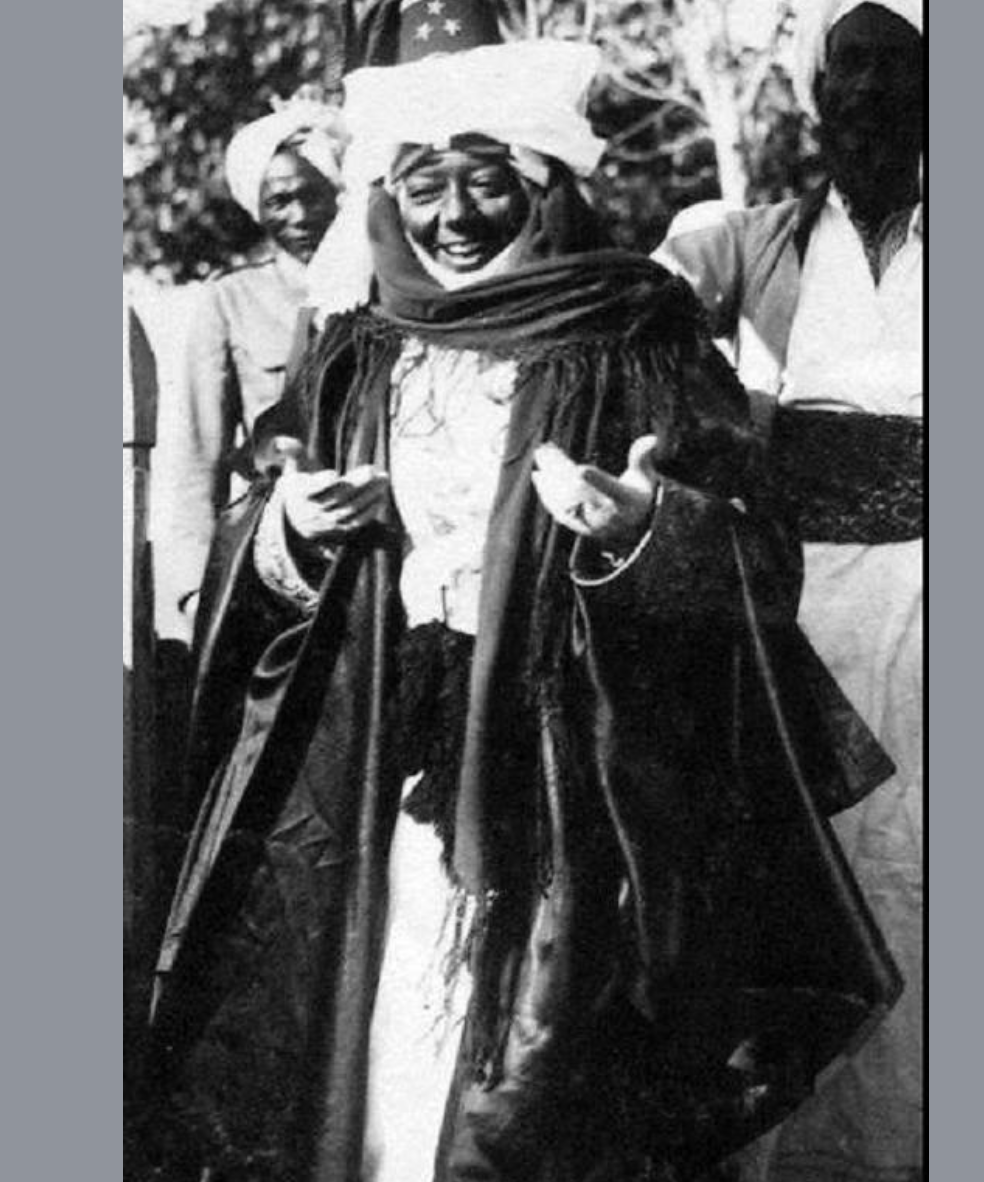
Sitt Sharifa Al Alawiya

The Italian colonial history of Eritrea regarding Muslims can be divided into three distinct periods:

  1. First Colonial Period (1885-1910): This phase focused on territorial conquest, responding to the Sudanese Mahdist threat, and implementing Governor Martini's "Muslim policies." The Italian colonial authorities aimed to pacify the region and secure control over the unstable Eritrean-Sudanese border. During this time, they established relations with the Mirgani family—a prominent Muslim family respected for its religious authority in both Eritrea and Sudan. The Italian authorities saw cooperation with the Mirgani family as essential for maintaining public order and unifying the colony.
  2. Second Colonial Period (1910-1920): Following the conquest of Libya, Italy sought to refine its approach to Muslim communities by studying Islamic law and institutions. This understanding helped strengthen colonial rule by incorporating the Islamic legal system into colonial administration, consolidating control over Muslim populations.
  3. Third Colonial Period (1920s-1941, Fascist Era): Italy adopted an openly pro-Muslim stance, projecting itself as the "Sword of Islam" and positioning itself as a protector of Islamic communities. During this period, the colonial authorities promoted a specific form of hierarchical and urban-centered Islam represented by the Mirgani family.

Role of the Mirgani Family

The Mirgani family, tracing its lineage to ‘Ali b. Abi Talib and Fatima, the daughter of the Prophet Muhammad, had significant religious influence in Sudan and Eritrea through the Khatmiya tariqa (Sufi order). The Italian colonial authorities first engaged with Sayyid Hashim al-Mirgani, who had relocated to Massawa after the Mahdist movement's rise in Sudan. Following his death in 1902, the Italians sought another prominent figure from the family to maintain their influence and settled on Sayyid Ga'far b. Bakrī al-Mirgani, who moved to Keren.

Sayyid Ga'far’s Role and Influence

Sayyid Ga'far’s presence in Keren, facilitated by the Italian authorities, helped establish an Islamic sphere of influence within colonial Eritrea, drawing many Muslim faithful to his leadership. His collaboration with the colonial authorities was crucial in maintaining public order and fulfilling the Italians' administrative goals. However, his growing influence led to internal disputes within the Khatmiya order, particularly with his aunt, Sharifa Al Alawiya, daughter of Sayyid Hashim, who resided in Massawa.

Eritrea’s Complex Ethnic and Religious Landscape

Eritrea's strategic position as a trade hub between the East, Africa, and the Mediterranean resulted in a complex ethnic, linguistic, and cultural makeup. Religious affiliation was only one of the many factors contributing to this diversity, and colonial authorities leveraged these dynamics to maintain control over the region.

The Italian authorities formalized agreements with the Mirgani family to ensure their influence over local Muslim communities, particularly in the Barka region, to counterbalance other Islamic powers outside the colonial borders. This relationship allowed Sayyid Ga'far to become a central figure in organizing the socio-religious life of the area, solidifying Italian colonial objectives.

In an attempt to resolve the disputes between Sayyid Ga'far al-Mirgani and his aunt, Sharifa Al Alawiya, the Italian colonial authorities brokered an agreement with Sayyid Ga'far in which:

  1. Sayyid Ga'far agreed to provide a list of eight to ten of his Khulafa in Eritrea, from which the government would select two to reside in Keren as his advisors.
  2. Two of his Sudanese advisors, Mūsā Muhammad, and Muhammad 'Utmān, would be removed from Keren, with Mūsā Muhammad being reassigned to Barentu and Muhammad 'Utmān to Nakfa to counteract rival influences.
  3. The role of scribe, previously held by Mūsā Muhammad, would be taken over by Khalifa Ga'far, someone preferred by the colonial authorities.

The conflict was fuelled by the competition between Sayyid Ga'far and Sharifa Al Alawiya over religious influence and collecting donations from the local Muslim community. Sharifa’s authority was limited by gender, and she could not appoint a new Khulafa. Despite her claim to the mosque where her father was buried, her intervention in religious affairs was not well received by the local population, who viewed such matters as traditionally male responsibilities.

To ease tensions, the colonial authorities recommended that Sharifa use Keren as a summer residence rather than a permanent home. A reconciliation was reached in December 1910 through the mediation of qāḍī Muhammad al-'Arabī, where Sharifa agreed to recognize her nephew as the head of the Khatmiya in Eritrea and refrained from interfering in his religious affairs.

However, despite the reconciliation, many followers stopped paying donations and began turning to the Khatmiya of Kassala in Sudan. This strained relationship between the Sudanese and Eritrean branches continued to create challenges for both leaders.

Despite these internal conflicts, Sayyid Ga'far remained supportive of Italian colonial policy. During the conquest of Libya, he urged Eritrean soldiers to fight against the Turks, whom he criticized as illegitimate heirs of the caliphate and "false Muslims." His support for the Italians reinforced colonial propaganda that distinguished his legitimate religious authority from the Turkish claim to Islamic leadership.

The dispute between Sayyid Ga'far al-Mirgani and his aunt, Sharifa Al Alawiya, centered around the appointment of Khulafa (representatives) within the Kshatriya order. The Khatmiya had a tradition of appointing representatives in a three-tiered hierarchy: the Kḫalīfat al-Khulafa, the Kḫalīfa muqaddam al-ḥadra, and ordinary Khulafa. Sayyid Ga'far's authority to appoint these representatives was challenged by Sharifa, who sought to influence decisions concerning the mosque where her father was buried.

The conflict intensified when some of the Khulafa, feeling marginalized by the new appointments, sought Sharifa’s intervention. Colonial authorities feared a split within the Khatmiya and stressed that male members traditionally handled appointments. Despite recognizing her nephew’s position as head of the Khatmiya in Eritrea, Sharifa asserted her control over the mosque and its religious activities.

The competition was primarily driven by their followers’ desire to control donations from the faithful. The relocation of Sharifa’s residence to Keren was perceived as an attempt to regain influence over donations that had been redirected to Keren by Sayyid Ga'far’s appointments.

To resolve the matter, the Governor of Eritrea arranged a meeting between Sayyid Ga'far and Sharifa in January 1911, with the presence of Italian authorities. During the meeting, Sayyid Ga'far agreed to share management of the donations with his aunt, while Sharifa agreed not to establish Keren as her permanent residence and returned to Massawa. This compromise helped to ease tensions and solidified the Italian strategy of maintaining religious influence within colonial borders.

Following the conquest of Libya in 1911, the Italian colonial authorities developed a more structured approach towards Islam in their colonies. Recognizing Islam as the majority faith and understanding the need to maintain colonial order, the administration began to show greater interest in studying and accommodating Islamic practices to prevent any religious unrest.

The Italian School of Arts and Crafts opened in 1911 in Keren, was reserved for the sons of Muslim notables. Initially, the local Muslim community was wary, suspecting attempts at Catholic proselytization. To alleviate these fears, Sayyid Ga'far enrolled his son, Sayyid Bakri, in the school, reassuring the community and leading to broader acceptance of the institution.

Sayyid Ga'far was pivotal in promoting the region's Islamic education and religious practices. He invited many Muslim scholars to Keren and utilized his hierarchical network of Khulafa’(deputies) to centralize the socio-religious organization of the area. These deputies conducted religious ceremonies such as marriages and burials, which previously varied among individual communities.

Sharifa Alawiya and Fascist Italy

During the fascist era, Italy adopted an explicitly pro-Islamic policy in its colonies, particularly in Libya, Eritrea, and Ethiopia, to gain support and counterbalance the influence of the Orthodox Church and other local religious authorities. This policy sought to project Italy as a protector of Islam and a champion of Muslim interests.

A key figure in this strategy was Sharifa Al Alawiya, a respected Islamic authority and descendant of the Prophet Muhammad who actively supported the fascist pro-Islamic policy. After returning to Eritrea in 1923, Sharifa played an influential role in promoting Islam in the region, acting as an intermediary between the Italian colonial authorities and local Muslim communities. Her support was utilized in propaganda campaigns, particularly during the conquest of Ethiopia, where her influence was overemphasized to gain legitimacy among Muslims.

The fascist regime's pro-Islamic stance included promoting the Arabic language, constructing and restoring mosques and Quranic schools, and facilitating Muslims' travel to the Middle East for religious studies. One notable achievement was the construction of the Sitti 'Alawiyya Mosque in Harar, Ethiopia, which was built in 1937 in honor of the Sharifa and symbolized the regime's commitment to supporting Islamic communities.

Although Sharifa's role was heavily highlighted in Italian propaganda, her influence in Ethiopia was limited. Nonetheless, her collaboration helped solidify Italy's image as a patron of Islam in the colonies, strengthening its presence and gaining support from neighboring Muslim communities.

Sharifa Al Alawiya was a key contact for the Italian colonial authorities, particularly during the fascist period, as part of a strategy to establish relationships with prominent Islamic figures. In May 1938, she travelled to Rome and was received by Mussolini at Palazzo Venezia and other Islamic dignitaries. The Italian press emphasized her role, presenting her as a descendant of the Prophet and a supporter of fascist Italy.

Her loyalty to the fascist regime was reciprocated with favorable treatment from the colonial authorities. In 1939, a book titled La Sceriffa di Massawa (The Sharifa of Massawa) was published in Italy, highlighting her support for the regime and her opposition to Mahdism, which she described as a "fanatical" movement. The sharifa’s influence and loyalty to Italy were reinforced through colonial propaganda, portraying her as a "queen without a crown."

Oral traditions among members of the Khatmiya reflect a similar admiration for Sharifa Al Alawiya and her close ties to the Italian regime. Her death in 1941 in Keren coincided with the British occupation of the city and the defeat of the Italians. According to these traditions, the sharifa’s heart stopped from the pain of Italy’s defeat, illustrating her unwavering loyalty to the fascist regime until her death.

In her own words, Sharifa Al Alawiya praised Mussolini as the "Sword of Islam," recalling her visit to Rome as a moment of deep honor and expressing her gratitude for Italy's support to Muslims, particularly Eritreans.

 During the British Administration

Later in life, Sayyid Ga'far expressed a wish to be buried in Kassala, Sudan. He moved from Keren to Agordat and then to Tessenei, where he passed away in 1944. His burial in Kassala, now the main center of the Kshatriya order, symbolized the cross-border solid influence of the Mirgani family.

After his death, his son, Sayyid Bakri, took over the administration in Keren, continuing the established system of khulafa’. The family's socio-political influence in the region was further solidified in 1946 when Sayyid Bakri was elected president of the Muslim League.

Sayyid Muhammad Abu Bakr al-Mirgani, despite his prestigious position in the Khatmiya Sufi Brotherhood, was often criticized for his lack of engagement in local affairs. He only became more active after receiving strong encouragement from Major R. Signals. Al-Mirani's shift to support the unionist cause was primarily influenced by Massawa-born merchant and lawyer Muhammad Umar Kadi, who advocated for a federation between Eritrea and Ethiopia. Kadi toured several cities to garner support for reforms within the League and reduce hostility towards unionists for economic reasons. Faced with losing influence within the League or seeing it align with the Pro-Italy Party, al-Mirgani chose to support the unionists to preserve his own status and power in 1948

Openly derided by Sultan as an “opportunist and egoist,” al-Mirgani thus built support for the union after having served nearly two years as the President of Eritrea’s largest nationalist organization. In theory, al-Mirgani’s shift to the unionist camp should have placed the League’s mission in greater jeopardy.392 As the spiritual head of Eritrea's largest and most influential Sufi brotherhood, al-Mirgani and his inner circle still carried influence in many Muslim communities as khalifas and former League officials. For some BMA observers, the rebellion against the “religious chief” (al-Mirghani) left most League supporters “without a clear and capable guide” to carry on their objectives as a united nationalist force.

As the spiritual head of Eritrea's most prominent Sufi brotherhood, his switch to the Unionist Party initially threatened the League’s cohesion. However, his defection ultimately reinforced the League's claims that confident Muslim leaders supported the union with Ethiopia to protect their economic and political interests. Al-Mirghani’s political reputation suffered greatly, especially when he switched his allegiance back to the Muslim League-dominated Independence Bloc in mid-1949. His inconsistent stance eroded his credibility, making him less influential in Eritrean politics.

Despite al-Mirghani’s defection and the complications it caused, the League continued to pursue its goals, including the first steps toward Tigre emancipation by establishing new autonomous clan structures in the Western Province in 1948. Al-Mirghani's wavering loyalty and diminished reputation illustrated the League’s resilience in advancing its agenda even when prominent Muslim leaders withdrew their support.

Kennedy Travaskis, the British officer in charge of Keren at the time, recalled an incident when a Muslim dignitaries, led by the Islamic Judge (Qadi) of Keren, visited his office one morning. The Qadi stated that they were there to protest, on behalf of the Muslim community, the mistreatment of their revered leader, Seyid Babiker Al-Mirgani, by a Christian police constable. A call to the police clarified the situation: Seyid Babiker had been caught drunk driving after crashing his car into a wall and vomiting whiskey on the officer.

When Travaskis sought guidance on enforcing the law or showing leniency, the Qadi suggested a discreet approach. Publicly fining Seyid Babiker could incite unrest and diminish the community’s respect for the Mirgani family, which would be disastrous. Instead, he advised handling the matter privately by revoking Seyid’s driver’s license and imposing a hefty fine without public exposure. Travaskis accepted this recommendation and resolved the issue quietly.

 Sources:

1.     S. Bruzzi, “Il Colonialismo Italiano e la Khatmiyya in Eritrea (1890-1941)”, Africa, Istituto italiano per l’Africa e l’Oriente (IsIAO), Rome, 2006.

2.     Joseph L. Venosa. Paths toward the Nation: Islam, Community, and Early Nationalist Mobilization in Eritrea, 1941–1961. (Ohio University Research in International Studies, no. 92.) Athens:  Ohio University Press,  2014. Pp. xix, 283

3.     Kennedy Travaskis's The Deluge: A Personal View of the End of Empire in the Middle East

Friday, 27 September 2024

Testimonies from members of so-called 'Menkae Movement': Amanuel Tesfamikael

 Testimony by Amanuel Tesfamikael, Uppsala, Sweden

In an interview with Aida Kidane in 2004


Introductory Note:

When the Isaias group (Selfi Nazenet/Alla group) split from the ELF in 1970, alongside two other factions, and later established the EPLF in 1972, presenting themselves as a democratic alternative to the ELF, they faced a significant internal challenge from a reform movement that called for democratic changes within the organization. According to its members, this movement sought to democratize the EPLF’s leadership structure. The EPLF leadership, however, labeled it as an "ultra-leftist" group and referred to it as "Menkae." The conflict between the EPLF leadership and the Menkae faction has since played a defining role in shaping the EPLF's security policies. The language was edited for fluency.

Mohamed Kheir Omer

--------------------

Highlights from the Interview:

"I was the first "Menkae" to be imprisoned. My commander, Brirai, sent a young peasant (manjus) who unexpectedly hit me with a stick while I was heading to the toilet. In anger, I retaliated with a stone, and we got into a struggle. We were both taken in and ordered to do punishments, like running laps and moving on our elbows. I refused, as I felt I wasn’t at fault. The youth was let go, but Brirai tied my wrists so tightly that the marks remain to this day. He made me sit outside, below the hill where the others slept, for the entire night. I did not hear the radio that night as the death of my father was announced."

"The next morning, I was summoned by the leaders—Isayas, Tewelde Eyob, Mesfin Hagos, Asmerom, and Saleh TeTew. They ordered me to undergo punishment, but I refused, insisting I was the victim in the situation. Suddenly, Isayas, Tewelde, and Mesfin began beating me brutally. I remember Saleh saying, “Don’t do this, this is why we left the ELF,” but they ignored him. Mesfin pressed his heavy Congo shoe onto my cheek, grinding my face into the rocky ground. My body was bruised, my lip was cut, and my cheeks were bleeding.

After the beating, I was taken to a fireplace where a French journalist, Christian Sabatier, was sitting by the fire, talking with Naizgi Kiflu. I’ll never forget the look of shock on his face. He didn’t say anything to me—spies or enemies could be anywhere, so he kept quiet. He had once held the front in high regard, but now he was seeing the harsh reality. From there, I was taken to my prison cell, a stone-walled room with a grass roof. Not long after, another prisoner, Habteselassie, joined me. I was glad for his company, and we had many long conversations."

---------------------------------------------

Testimony by Amanuel Tesfamikael, Uppsala, Sweden

In an interview with Aida Kidane in 2004

“Because the ELF was attacking the Obel, I strongly opposed the use of arms between fellow Eritreans and decided to join Selfi Nasnet. I travelled from Khartoum to Port Sudan, and a fighter on an errand guided me on foot from Garora to meda (field), where I joined in Gereger, Sudan, in May 1972.

Upon arriving at the Selfi camp in Gereger around 4-5 pm, I saw fighters gathered by the riverbank, including Meles Gebre Mariam, whom I knew. After a warm greeting, the Ganta leader asked for my name and where I came from, all done verbally since written registration started later during the Menkae period. Because I knew Meles from Addis, we often talked, and I found him to be a gentle person.

At that time, there wasn't a formal training camp. New recruits received occasional training when possible and learned on the job. Joining the front made me feel a deep sense of camaraderie. Fighters bonded like brothers, playing football, joking, and even wrestling. I felt as if I were in a Che Guevara film. There was no hierarchy when we ate; everyone, from leaders to soldiers, sat together.

By 1972, we were only about 60 fighters, with another 60 stationed in towns, split into 4 Gantas (squad), each consisting of 15-18 fighters. After uniting with PLF1, we became 4 Hailis (platoon), each consisting of 80 to 100 fighters. My Ganta leader in 1972 was Girmai Mehari, and after the unification in 1973, my Haili leader was Brirai, with Taha leading my Ganta.

There were some Muslim fighters with us before PLF1 joined, including Taha and Alamin, a highlander who played football for the Mar Rosso team. We also had 4-5 Mensa Muslims who didn't want to stay with the Obel.

In May 1972, Isayas held a major meeting with the 60 fighters, presenting his “miKla’e mega-reja”  (Opening the curtain)  or Nehnan Elamanan in Tigrinya, which made us feel proud and progressive. However, leadership meetings rarely shared their strategies or political goals with us. Our only contact with politics came from the political commissioners who taught us.

During one night in 1972, while we were stationed in Gereger, ELF spies pretending to be peasants approached our position. Our guard heard sounds and, when receiving no response, fired a warning shot, waking us up. At sunrise, we discovered 5-600 ELF fighters approaching us. We engaged in a battle, killing about 100 of them while losing 5-6 of our own. The Sudanese authorities later advised us to return to Eritrea due to agreements between Numeri and Haile Selassie.

We moved to Sahel and set up camp in Gergeret, where we mainly studied while the Ethiopians ignored us. We maintained self-sufficiency by buying goats from peasants. We held strategic positions, such as Algena Mountain, where we monitored Sudan, the sea, and southern areas, communicating by radio.

Life was simple, with shared responsibilities like cooking, running errands, playing football, and discussing the situation. At night, we kept guard and stayed with our Gantas, contrary to accusations that we were secretly meeting and plotting. Leaders like Petros Solomon and Sebhat would occasionally lead discussions, but they later distanced themselves from us when the leadership grew fearful, and some were disarmed and imprisoned.

Hilal, a well-liked fighter from Dankalia who led the medic group, was killed in either Algena or Gl’e Mountain in late 1972 or early 1973. He was admired for his righteousness, and we often wondered what he would have said during the Menkae movement.

The so-called Menkae Conflict

When the initial conflict began, the leadership wanted to eliminate Solomon W. Mariam. They held a secret meeting with around 11 members, including two newer, progressive fighters, Haile Menkorios and Mehari Girmai. At that time, we were only Selfi Nesanet, about 120 of us, without the PLF.

During the meeting, Musie Tesfa Mikel happened to be passing by, and Isayas and the others called him to join since Musie and Solomon had a history of disliking each other. Solomon was accused of regionalism, and Musie acknowledged, "There is regionalism, it's true," which angered the others. Tsegai W. Mikel, a member of Mesri Haili, struck Musie with the butt of his rifle, marking a turning point in the situation. The secret was out, and soon everyone was discussing past abuses. The leadership, feeling threatened, responded by imprisoning many of us. Those like Petros Solomon and Sibhat Efrem made self-criticisms and were released, but we stood firm in our position.

Even Isayas spoke to me by the river one day, saying he agreed with our demands, but not in this manner. Dehab and Aberash, experienced fighters, also stood their ground. Werku, I later heard, was released for health reasons and now serves as an official in Eritrea. Some fighters mocked the women, claiming they came to meda because they couldn't find a man, as many of the prominent Asmarinos were there. However, the women knew many of the men's secrets, which made them acutely aware of the abuses. Abeba, a newcomer and former hostess, later married Bruno but was not charged. Her boyfriend, Kifle Mariam, was part of the secret group in Addis. He eventually left for Denmark and remains there.

Initially, it was Yohannes who wanted the leadership to step down, but Musie, Afworki, and Dehab convinced him to hold off until a congress could be convened. As grievances were being collected, tensions escalated. Meles and Musie, serving as Ganta commissioners—a role seen as a demotion since they were expected to follow the leadership's decisions without participating in battle planning—were sidelined. Ermias Debesai was the only one who pointed out that both sides were at fault, while the rest took sides. Haile supported the leadership, accusing the "Menkae" group of acting like falools (undisciplined). Mehari G. Tsion openly aligned with Solomon and took a right-wing stance.

The first meeting focused on gathering grievances, while the second was for the study committee, with Isayas holding the most power. We demanded democratic governance. Since most fighters were unaware of the first two meetings, tensions flared after Musie was hit, leading the leadership to call for a broader meeting. I was chosen to represent my Ganta, though Haile and Mehari, also from my Ganta, were absent.

The meetings revolved around forming a teko-tsatsa-rit  (Supervision Committee)  to discuss the issues  to oversee the leadership until the next congress. These meetings were essential as grievances grew, signalling a revolt among the rank-and-file soldiers, particularly as Solomon was going too far. The leadership responded with anger, often shoving us around or beating us, as happened to me.

While the leadership held their two initial meetings, we "Menkae" had three meetings with them to address our concerns. In meda, there was no bureaucratic process for calling meetings; the leadership made decisions independently, despite sharing daily life with the rest of us. Soldiers and leadership would often mingle, play football, sit together, and chat, fostering an appearance of camaraderie.

The name "Menkae" was spontaneously coined by Naizgi—someone said it, and it stuck. Contrary to the meaning associated with bats, which move at night, we actually talked more during the day than at night. At night, each Ganta would sleep together in one place, and it was common to talk for about half an hour before sleeping. We prepared food and divided it within our Gantas. During the day, we would meet with members of other Gantas or familiar faces, like when I used to visit Meles’ Ganta to chat with him. Even the leaders ate with us during the day, as there were no clear ranks then, and we would play football together.

Our movement had momentum, and we could have succeeded, but we lacked leadership experience and the cunning necessary to navigate the situation. We sought solutions collaboratively with all the fighters, but the leadership manipulated things, especially when some fighters started shouting slogans like “2 bi bado Hama si’ira,” (Hamasein won as the reference to the football clubs organized by provinces, as the majority of the Menkae members were perceived to be from Akele Guzai, it meant those from Hamasein (Isaias and others from the province, who were a majority) won over Akele Guzai (the dissidents) which I found immature, though I defended it until the end. Despite the internal turmoil, we still respected the front, and when the enemy approached, we all joined the battle.

I was the first "Menkae" to be imprisoned. My commander, Brirai, sent a young peasant (manjus) who unexpectedly hit me with a stick while I was heading to the toilet. In anger, I retaliated with a stone, and we got into a struggle. We were both taken in and ordered to do punishments, like running laps and moving on our elbows. I refused, as I felt I wasn’t at fault. The youth was let go, but Brirai tied my wrists so tightly that the marks remain to this day. He made me sit outside, below the hill where the others slept, for the entire night. I did not hear the radio that night as the death of my father was announced.

When I was placed in the  clinic of the training centre,  before leaving for Sudan, I was chatting with Abeba and Tewelde (who now lives in Canada). Abeba, knowing my family well, asked if I had any news about my father. Tewelde, not knowing the weight of her words, innocently told me that he had passed away. I was shocked but tried to hide my reaction, pretending I already knew—after all, fighters were expected to be tough. Later, I took her aside and asked for more details. She told me that my father had high expectations for me and was deeply disappointed, passing away with a heavy heart. He had been a devoted Ethiopian loyalist.

The next morning, I was summoned by the leaders—Isayas, Tewelde Eyob, Mesfin Hagos, Asmerom, and Saleh TeTew. They ordered me to undergo punishment, but I refused, insisting I was the victim in the situation. Suddenly, Isayas, Tewelde, and Mesfin began beating me brutally. I remember Saleh saying, “Don’t do this, this is why we left the ELF,” but they ignored him. Mesfin pressed his heavy Congo shoe onto my cheek, grinding my face into the rocky ground. My body was bruised, my lip was cut, and my cheeks were bleeding.

After the beating, I was taken to a fireplace where a French journalist, Christian Sabatier, was sitting by the fire, talking with Naizgi Kiflu. I’ll never forget the look of shock on his face. He didn’t say anything to me—spies or enemies could be anywhere, so he kept quiet. He had once held the front in high regard, but now he was seeing the harsh reality. From there, I was taken to my prison cell, a stone-walled room with a grass roof. Not long after, another prisoner, Habteselassie, joined me. I was glad for his company, and we had many long conversations.

As I mentioned earlier, the main issue arose when Solomon was supposed to be killed. Musie opposed this decision and was struck with a rifle. This sparked a wave of questions within the leadership. We had proposed 12 points, which were initially agreed upon by the leadership. However, of the 9 people selected to oversee the leadership, only two  were from Menkae, and they were later replaced, leaving no Menkae members involved.

Sixty fighters, including Petros Solomon  and Sebhat Efrem, were labelled as Menkae and ordered to put down their arms. Many were either persuaded or intimidated into changing their stance. Musie, a short, thin man with a light complexion, and Yohannes, who was strongly built and even larger than Mesfin Hagos, stood out among us. Yohannes explained that the name "Menkae" meant "leftist" in proper Tigrinya.

The imprisonment began gradually. One day, while I was out in Toilet, a group of men followed me, provoked a fight, and I was beaten and imprisoned. Soon, the others were also rounded up and taken to prison. The cells were stone-walled. The three female prisoners managed to gather some information from the guards and shared it with me. I was allowed to deliver food to the other Menkae prisoners, and the women passed along their updates. I communicated these through songs in English, which the others understood as coded messages. However, one day, a guard who understood English overheard me, and nine of us, including Musie, were tied up and brought out. Naizgi, known for his cruelty, whipped us one by one, though we all denied knowing anything.

We had pushed for 12-point reforms, and though the leadership initially agreed, they manipulated the process when it came time to nominate representatives. Names were suggested, but pro-leadership figures ended up being chosen, and the situation worsened. Mesfin Hagos and Tewelde Eyob were among those responsible for brutal actions. The fighters from the Red Sea had initially supported us, but they were later excluded from the narrative, making it appear as though the Menkae movement was solely a highlander (Kebessa) affair.

Mesfin Hagos and Tewelde Eyob referred to us as “bi gedli ash-k’elal,” meaning ‘last-minute revolutionaries’, particularly targeting those of us from Kebessa. They believed liberation was near and saw us as merely there to serve their cause. The leadership had categorized us into two groups: the "lesser evils" and the "dangerous ones," who posed a challenge due to their leadership potential.

The individuals considered dangerous agitators included:

  1. Musie Tesfamikael
  2. Yohannes
  3. Afworki Teklu (Amiche)
  4. Habtesion Kidane
  5. Tarakegn
  6. Mebrahtu Weldu (Haili leader)
  7. Mikel Russom (from Mikel Pharmacy)

I recall these names vividly. They were confined in small huts that resembled dog kennels, so cramped that when sitting, their heads touched the roof. Each person was isolated, forbidden from communicating with others. Those of us deemed "less dangerous" were placed together in a larger tent. The women—Dehab, Werku, and Aberash—were kept in a room covered  by a sheet of garment.

The chief torturer was Solomon W. Mariam, with Mehari Ekubazgi, a veteran fighter, Naizgi, Mehari Merhatsion, an intellectual trained in Russia, and Haile Jebha, a short, thin man from the Abba Shawel area, assisting him.

It was said that the women, particularly Dehab and Werku, had a significant influence on Mebrahtu Weldu, who was admired for his bravery and humanitarianism. Relationships were not forbidden, and Afwerki and Werku were even seen holding hands openly.  Solomon W. Mariam, however, was one of the most ruthless individuals, responsible for many deaths. After our group, the tsegamyan (leftists), were eliminated, the yemaneen (rightists) faced their turn. Solomon himself was eventually imprisoned, and Petros Solomon was appointed head of security. Solomon W. Mariam was a staunch regionalist from Hamasien.

The Red Sea group had initially pretended to support us, encouraging our efforts. But when the situation shifted, they acted as if they had never been involved. Their strategy was to let us and Isaias fight each other, allowing them to step in and seize power.

Isayas Wedi Flansa, along with Tewelde Eyob and Wedi Fenkel, were firmly against the e movement. These men were part of the first group from Ala, which we referred to as the "Sierra Maestra" group. The name may have been used in meda, but we popularized it in our Menkaay article. The term "Sierra Maestra" comes from South America, where Che Guevara and Castro began their struggle, symbolizing a high mountain with a plateau at the top. These men advocated for our execution.

Later, when fighters from Akele Guzai were being demoted, members of the Sierra Maestra group were ordered to surrender their weapons. I remember seeing Tewelde Eyob unarmed the last time I left for Sudan. While I was in prison, I heard how events unfolded against these men. Isayas Afwerki remained in the background during confrontations, avoiding direct involvement when tensions were high. The Hamasien faction was consolidating power and feared the influence of the Akele Guzai group. I never found out exactly how they died, as it likely occurred after I left meda. Among the Menkae group, there were rumours that Isayas had poisoned Abraham Tewelde.

Habteselassie was a student, but rumours began circulating that he was an Ethiopian spy. He and I were the first prisoners, and we often talked. He revealed to me that his group, along with Isayas, provided the Ethiopians with little accurate information and mostly misinformation, their main goal being to retaliate against the ELF, who had been pursuing them.

After our imprisonment, 30 more fighters were ordered to lay down their weapons and were confined for a day. Among them were Petros Solomon and Sebhat Efrem. They made self-criticisms and were released. However, Mesfin, Petros, and Sebhat began recruiting new fighters, spreading the idea that we were opportunists who deserved to be executed. When I was being sent to Sudan for medical treatment on my first trip, they placed me among these new recruits to intimidate them and make an example of me.

Before the others were imprisoned, the Ethiopians launched an attack on us in Sahel in January 1974. We were in a better strategic position, holding higher ground in the mountains while the enemy was below. Instead of using guerrilla tactics, we defended our positions. Despite our internal conflicts, everyone participated in the battle. We lost 10-12 fighters, but the Ethiopians suffered much heavier casualties.

One day, while we prisoners were eating together, Yohannes told a joke, and I laughed loudly. This angered Mehari Ekubazgi, who kicked me in the back. Furious, I fought back, despite him being armed. Other soldiers quickly restrained me, holding both my arms, while Mehari punched me in the face and struck both sides of my neck until I collapsed. He then hit my thigh with a stick, just above my ankle, causing it to swell. Since I wasn’t considered one of the main agitators, they used my leg injury as a reason to send me to Sudan for treatment.

When I arrived in Port Sudan, I met our representative, Wedi Arbate. He informed me that a letter had been sent, stating I was discharged from the front and that I was no longer considered Eritrean. I couldn’t accept this, and with Wedi Arbate’s permission, I returned to meda.

Upon my return, Solomon Welde Mariam was shocked to see me. Mogos Fasil, whom I knew from school, was there as well. After being placed in the medical ward, I was sent back to prison that same night and remained there for seven months. Later, three of us were sent to Sudan, escorted by a Ganta of about 12 fighters, led by Girmai Mehari, a brave and liberal man. When some soldiers tried to harass us, Girmai stopped them. We were taken out under the cover of night to avoid being seen by other fighters and arrived in Garora by morning. As we were leaving, Solomon warned me, showing his pistol, saying if I ever returned, I would face it.

From Garora, we took a bus to Port Sudan and went to our representative’s office. We were given some money and sent on our way to Khartoum.

Eventually, I was imprisoned twice—once for 2 months and later for 7 months. During my first imprisonment, I learned that my father had passed away, which deeply affected me. Despite the harsh treatment, I continued to stand by my beliefs. After being sent to Sudan for medical treatment, I eventually returned to meda but was imprisoned again. The leadership's fears and distrust led to the breakdown of the unity we once had.

The Menkae movement, though a strong force for change, was ultimately suppressed by the leadership, with many of us imprisoned, beaten, or expelled. Despite our struggles, we maintained our principles, even as internal conflicts gave the leadership an excuse to undermine us.”